
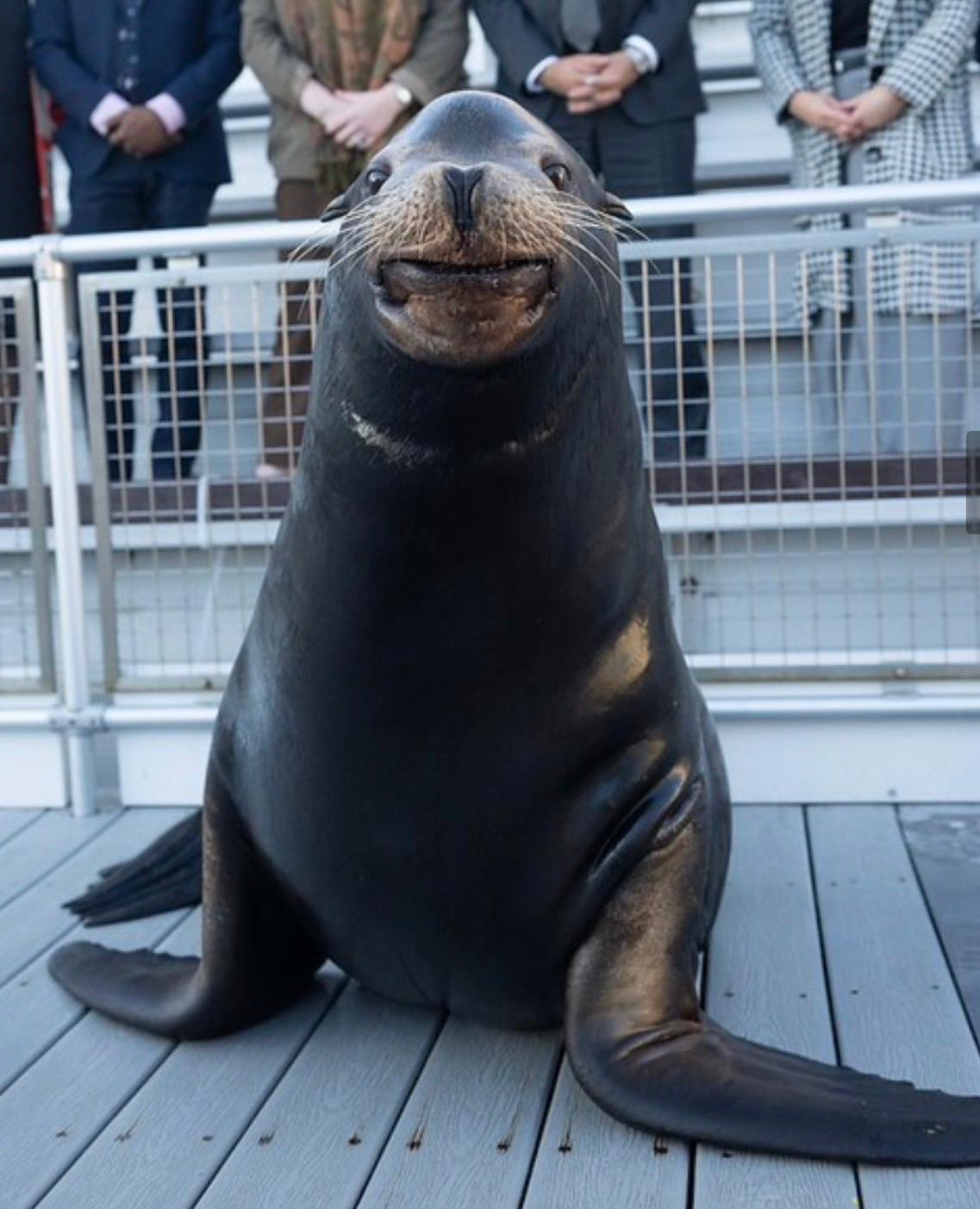
A sea lion rests on the boardwalk deck of its habitat at an aquarium. أسد بحري يستريح على منصة خشبية داخل موطنه في أحد أحواض الأحياء المائية.
More Than Entertainment: How Aquariums Help Educate Children and Protect the Environment
Opinion – November 3, 2026 | NYC Arab Post
In a world facing growing environmental challenges and accelerating climate change, aquariums have become more than tourist attractions and family entertainment destinations. They can serve as centers for education, scientific research, and environmental awareness, offering visitors opportunities to explore marine ecosystems, understand biodiversity, and recognize humanity’s responsibility to protect wildlife and natural habitats.
Aquariums operate in countries around the world, combining scientific knowledge with firsthand observation and introducing children and adults to marine species they might otherwise never encounter in their natural environments.
Learning Beyond the Classroom
Educational visits to aquariums can play an important role in encouraging children’s curiosity and developing their interest in science and nature.
When children observe fish, sharks, jellyfish, and other marine animals, they often begin asking questions about how these creatures breathe, find food, and adapt to their surroundings.
These experiences help connect classroom lessons with real-world observations, making learning more engaging and memorable.
Aquarium visits can also strengthen observation skills, encourage critical thinking, and introduce young people to fields such as biology, environmental science, and oceanography.
Protecting Our Oceans Is a Shared Responsibility
Marine ecosystems face increasing threats, including plastic pollution, overfishing, coral reef degradation, and rising ocean temperatures.
Some aquariums help raise awareness of these challenges through educational exhibitions, scientific research, and conservation initiatives focused on threatened species.
Certain institutions also participate in marine animal rescue and rehabilitation programs, while contributing to research that improves scientific understanding of environmental changes and their effects on ocean life.
However, the value of these institutions also depends on their commitment to animal welfare, appropriate living conditions, and responsible educational and research practices.
Can an Aquarium Visit Influence a Child’s Future?
A family visit to an aquarium may seem like a simple recreational activity, but it can create lasting educational impressions.
A child who encounters marine wildlife up close may develop an interest in biology, marine science, veterinary medicine, or environmental conservation.
Shared learning experiences also encourage conversations between parents and children, creating opportunities to ask questions, exchange ideas, and discover new interests together.
Encouraging schools and families to organize educational visits can therefore help develop greater environmental awareness among younger generations.
Balancing Entertainment With Environmental Responsibility
Despite their educational benefits, aquariums also raise legitimate questions about animal welfare and the suitability of keeping marine species in controlled environments.
Supporters argue that responsible aquariums can contribute to education, research, and conservation. Critics emphasize the importance of reducing captivity, particularly for species with complex social behaviors or extensive natural habitats.
For this reason, aquariums should be evaluated according to clear scientific standards, including animal welfare, transparency, educational quality, and measurable conservation contributions.
Should Educational Experiences Be Accessible to Everyone?
Opportunities to explore marine life should not be limited to families who can afford admission fees and travel expenses.
School partnerships, discounted admission programs, free educational activities, and multilingual resources can help make these experiences accessible to broader communities.
Investing in environmental education requires more than building modern facilities. It also means ensuring that children from different economic and social backgrounds can benefit from them.
Our Perspective: Knowledge Is the First Step Toward Conservation
The true value of aquariums should not be measured solely by their size or the number of species they display, but by their ability to promote scientific understanding, encourage respect for nature, and contribute responsibly to marine conservation.
An educational experience that deepens a child’s understanding of the natural world may inspire an interest that lasts for years.
More importantly, environmental awareness should translate into everyday actions, from reducing plastic waste to protecting natural resources and supporting conservation initiatives.
The question remains: Should we see aquariums simply as entertainment destinations, or can they become meaningful centers of learning that help raise a more environmentally conscious and responsible generation?
Contact the Newsroom
Have a tip, correction, or story idea about this article? Reach out to our team.
Stay Informed
Get the latest Arab American news, new issues, and community updates delivered to your inbox.
Comments
Be the first to comment.
Read Also
Related News

Helping Our Children Thrive: The Importance of Positive Youth Development Programs
As a parent in New York City, I understand the challenges of raising children here. One of my strongest recommendations for helping our children thrive is to keep them involved in positive youth development programs — and to make time to sit with them, listen, and guide them.

Raising Arab Children in America: Between Cultural Differences and Protecting Identity
Many Arab families in America face a daily challenge raising children between two cultures. How can they preserve Arab identity while integrating into American society?

Opinion: Full-Day, Full-Year 2-K Is the Kind of Leadership New York Families Need
Mayor Zohran Kwame Mamdani's announcement that most 2-K seats will operate on a full-day and full-year schedule beginning this fall is more than an education policy — it is an affordability policy, a workforce policy, and a family stability policy.